How do we uncover our personal style?
There are two ways you can go when it comes to personal style. Either well-curated or diverse.
Many said that they are frustrated where to draw their line and be confidence on their own style, and to save time and money when shopping for the closet.
Whether our style is 'Niched and Narrowed' or 'Vast and Varied', let's get started to map out the style that are all our own by answering these questions:

1. Who are some of the celebrities whose -ESSENCE- you resonate with? their Energy, personality, You on your best day, secret alter Ego

2. Whose -Closet- would you love to raid? Celebrity or Friend, instantly have 50% of What they own.

3. What are the -CITIES- that best represents your style? It can be a city that we never even travelled to, or a vague idea e.g. a mountain town on a river.
4. How do you want to -FEEL- when you walk out the front door in the morning?

5. How do you want to -FEEL- when you run into an EX or Business IDOL on the street?
6. What is the -BEST VERSION- of your life just three years from now? You're living your dream. What does that look like?

7. In that life just three years from now, what are you -WEARING- on a Tuesday Afternoon?
8. ..... what are you -WEARING- on a Saturday Night?

9. What outfit would make you feel -SUCCESSFUL-? Be as specific as you can: why did it makes you feel successful: expensive HANDBAG? not too TIGHT? BRAND? scored for $20?

10. What Clothing items or accessory makes you feel -SEXY-?
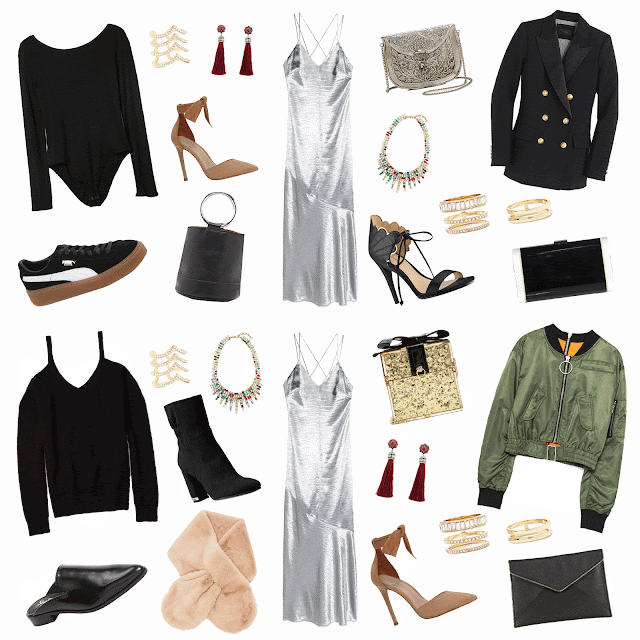
11. You swoon when you see -THIS ITEM- in a shop window or on Pinterest.
12. You would -LOVE- if someone described your personal style as this.

There are two ways you can go when it comes to personal style. Either well-curated or diverse.
Many said that they are frustrated where to draw their line and be confidence on their own style, and to save time and money when shopping for the closet.
Whether our style is 'Niched and Narrowed' or 'Vast and Varied', let's get started to map out the style that are all our own by answering these questions:

1. Who are some of the celebrities whose -ESSENCE- you resonate with? their Energy, personality, You on your best day, secret alter Ego

2. Whose -Closet- would you love to raid? Celebrity or Friend, instantly have 50% of What they own.
3. What are the -CITIES- that best represents your style? It can be a city that we never even travelled to, or a vague idea e.g. a mountain town on a river.
4. How do you want to -FEEL- when you walk out the front door in the morning?

5. How do you want to -FEEL- when you run into an EX or Business IDOL on the street?
6. What is the -BEST VERSION- of your life just three years from now? You're living your dream. What does that look like?
7. In that life just three years from now, what are you -WEARING- on a Tuesday Afternoon?
8. ..... what are you -WEARING- on a Saturday Night?

9. What outfit would make you feel -SUCCESSFUL-? Be as specific as you can: why did it makes you feel successful: expensive HANDBAG? not too TIGHT? BRAND? scored for $20?

10. What Clothing items or accessory makes you feel -SEXY-?

11. You swoon when you see -THIS ITEM- in a shop window or on Pinterest.
12. You would -LOVE- if someone described your personal style as this.

Comments
Post a Comment